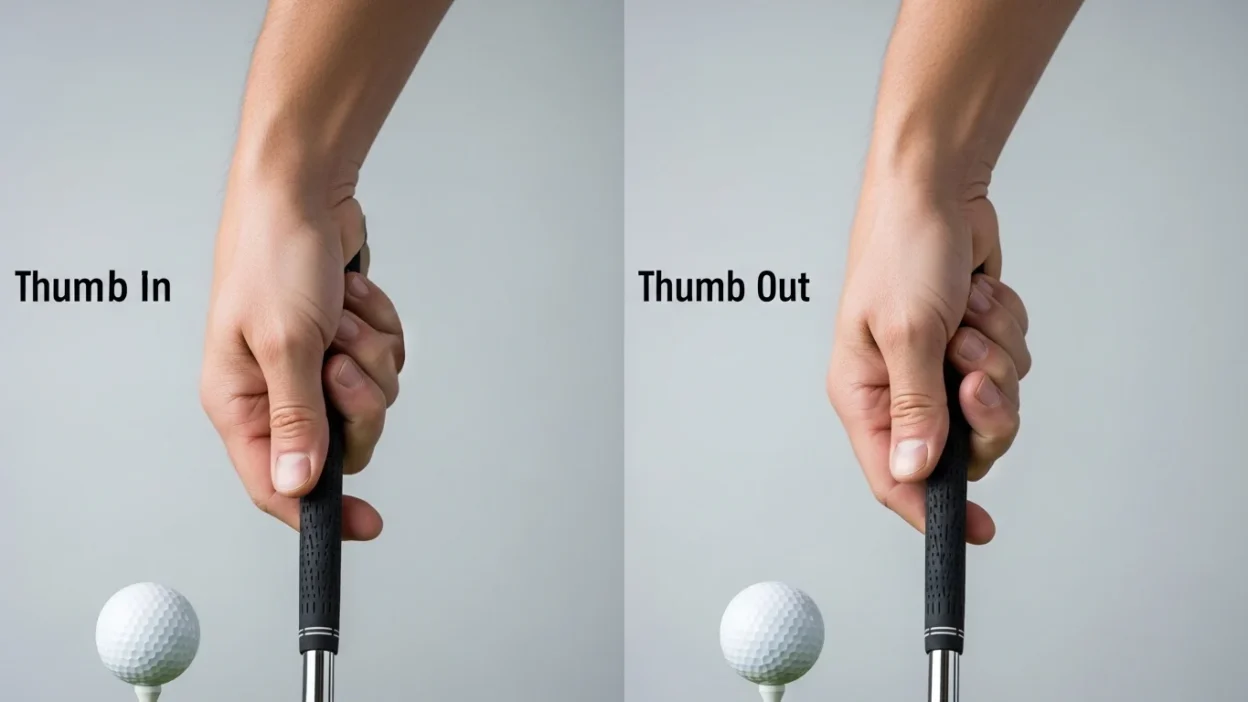
Many people feel confused when they hear “thumb in” and “thumb out.” These phrases can mean different things depending on the situation—like body language, sports, or simple daily actions. Because of this, learners (especially beginners and ESL students) often mix them up.
The good news is that the idea is actually very simple once you understand it clearly. This guide will explain everything in easy words so you can understand it the first time you read it.
Quick Answer
- Thumb in = Your thumb is inside (hidden or tucked in)
- Thumb out = Your thumb is outside (visible or sticking out)
In simple words:
- In = inside your hand or object
- Out = outside your hand or object
Simple Origin or Background
The phrases “thumb in” and “thumb out” come from basic English direction words:
- In means something is inside or not visible
- Out means something is outside or visible
These phrases are often used in:
- Body language
- Sports (like cricket, basketball, or fitness)
- Everyday instructions
- Safety or posture tips
Because they are used in many areas, people sometimes misunderstand them.
Clear Explanation of the Difference
What Does “Thumb In” Mean?
“Thumb in” means your thumb is placed inside your fingers or hidden.
Examples:
- Making a fist with your thumb tucked inside
- Holding something tightly
- Keeping your thumb safe during a movement
👉 Think: Thumb = not visible
What Does “Thumb Out” Mean?
“Thumb out” means your thumb is outside your fingers or visible.
Examples:
- Giving a thumbs-up sign 👍
- Holding something with your thumb on the outside
- Showing direction or approval
👉 Think: Thumb = visible
Comparison Table
| Feature | Thumb In | Thumb Out |
| Position | Inside the fingers | Outside the fingers |
| Visibility | Hidden | Visible |
| Common Use | Fist, safety grip | Gestures, holding objects |
| Feeling | Tight, secure | Open, relaxed |
| Risk Level | Can be risky in some cases | Usually safer for grip |
Which One to Use and When
Use “Thumb In” When:
- You are making a tight fist
- You want a firm hold
- You are following certain instructions (like in exercise)
⚠️ Be careful:
In some activities (like punching or lifting), keeping your thumb inside can be unsafe.
Use “Thumb Out” When:
- You are holding objects (like a bottle or bat)
- You are making gestures (like thumbs up)
- You want a natural and safe grip
👍 This is the most common and safer position in daily life.
Common Mistakes People Make
1. Mixing Up “In” and “Out”
Many learners forget that:
- In = inside
- Out = outside
2. Using “Thumb In” for Everything
Some people think “thumb in” is always correct, but it is not safe in many situations.
3. Not Understanding Context
The meaning can change depending on the activity:
- In sports → affects safety
- In body language → affects meaning
4. Ignoring Safety
For example:
- A thumb-in fist can cause injury during punching
- A thumb-out grip is often safer
Everyday Real-Life Examples
1. In Emails
- “Make sure your thumb is out when holding the tool.”
- “Keep your thumb in for this exercise step.”
2. In News or Instructions
- “Players are advised to keep their thumb out while gripping the bat.”
- “The coach corrected the student’s thumb position.”
3. On Social Media
- “Thumbs out = confidence!”
- “Don’t keep your thumb in while lifting weights!”
4. Daily Life
- Holding a glass → thumb out
- Making a fist → thumb in (but carefully)
- Giving approval → thumb out 👍
Learning Section for Students and Beginners
Here is a simple way to remember:
Easy Trick
- In = Inside (Hidden)
- Out = Outside (Visible)
Practice Exercise
Look at your hand:
- Make a fist with your thumb inside → this is thumb in
- Show a thumbs-up → this is thumb out
Quick Check
Ask yourself:
- Can I see the thumb?
- Yes → Thumb out
- No → Thumb in
FAQ Section
1. What is the main difference between thumb in and thumb out?
The main difference is position.
- Thumb in = inside
- Thumb out = outside
2. Which one is safer?
In most cases, thumb out is safer, especially when holding objects.
3. Why do people get confused?
Because these phrases are used in different situations like sports, gestures, and instructions.
4. Is thumb in ever dangerous?
Yes, in some activities (like punching), it can cause injury.
5. When should I use thumb out?
Use it when holding objects, making gestures, or doing daily tasks.
6. Is thumb out always correct?
Not always, but it is more common and safer in daily use.
7. Can these terms change meaning?
Yes, depending on the situation (sports, body language, etc.).
8. How can I remember the difference easily?
Just remember:
- In = inside
- Out = outside
Conclusion
The difference between thumb in and thumb out is very simple once you break it down. It all comes down to one idea:
- Thumb in = inside and hidden
- Thumb out = outside and visible
Even though the idea is easy, confusion happens because these terms are used in many areas like sports, safety, and daily life. By remembering the basic meaning and practicing with your own hand, you can understand and use these phrases correctly every time.