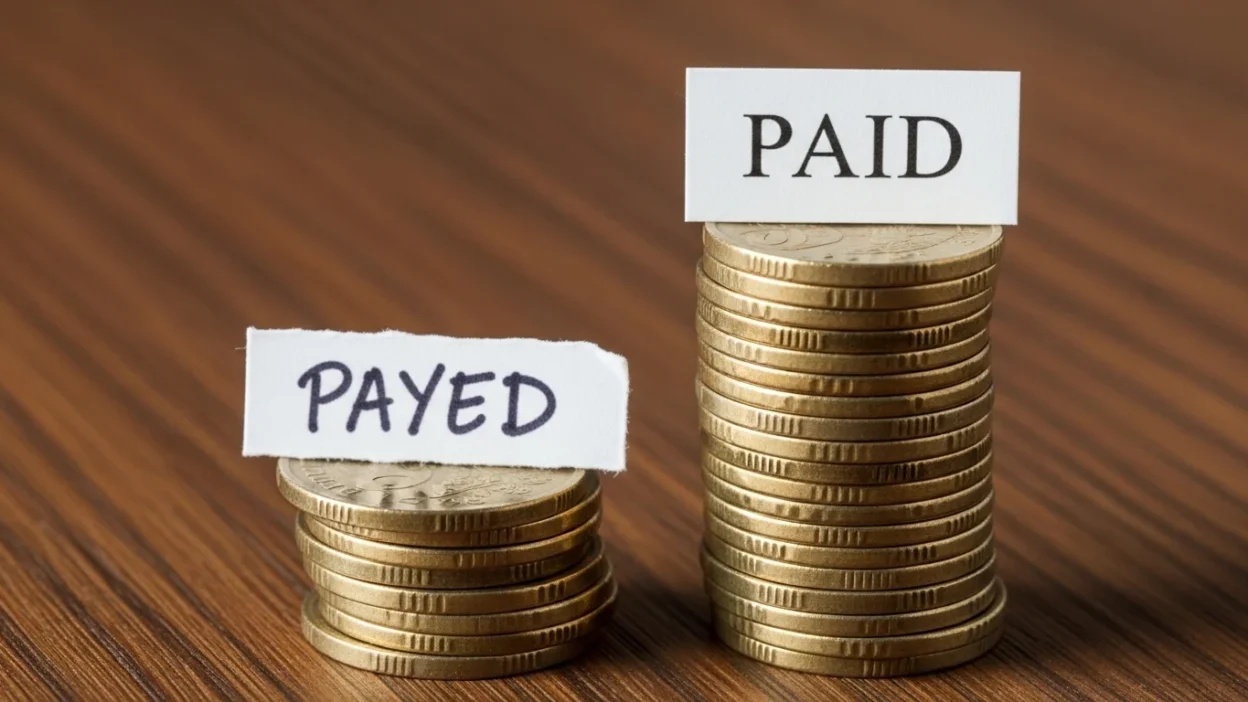
Many people feel confused about “payed” and “paid” because they look very similar. Both come from the verb “pay,” but only one of them is used in most everyday situations. The confusion usually happens when writing emails, messages, or school work.
The good news is that the difference is actually very simple. Once you understand one small rule, you will never mix them up again.
Quick Answer (Easy to Remember)
- ✅ Paid = correct past form of “pay” (used in almost all cases)
- ⚠️ Payed = very rare, used only in special situations (mainly about ships and ropes)
- 💡 In daily life, you should almost always use “paid”
Simple Background: Where Do These Words Come From?
The verb “pay” is an irregular verb in English. That means it does not follow the normal “-ed” rule like “worked” or “played.”
- Base form: pay
- Past form: paid
So, instead of “payed,” English changed the spelling to “paid” over time. This is why “paid” is correct in almost every situation.
However, the word “payed” still exists, but it is used in a very specific and uncommon way related to ships and ropes.
Clear Explanation of the Difference
Let’s break it down in the simplest way:
1. What Does “Paid” Mean?
“Paid” is the correct past tense of “pay.” It means giving money or finishing a payment.
Examples:
- I paid the bill yesterday.
- She paid for the groceries.
- They paid their rent on time.
👉 Use “paid” when talking about money, work, services, or anything related to payment.
2. What Does “Payed” Mean?
“Payed” is a special word used in nautical (sea-related) language.
It means:
- To cover something (like rope or wood) with a protective material
- To let out a rope slowly
Examples:
- The sailor payed the rope carefully.
- They payed the deck with tar to protect it.
👉 This word is rarely used in daily conversation.
Comparison Table (Easy to Scan)
| Feature | Paid | Payed |
| Common use | Very common | Very rare |
| Meaning | Gave money / completed payment | Covered or handled rope (ships) |
| Correct for daily use | ✅ Yes | ❌ No |
| Example | I paid the bill | The sailor payed the rope |
| Should you use it? | Yes, almost always | Only in special cases |
Which One Should You Use and When?
Here’s the simple rule:
👉 Use “paid” in 99% of situations.
Use it when talking about:
- Money
- Bills
- Salaries
- Shopping
- Services
Examples:
- I paid my phone bill.
- She paid for dinner.
- We paid the driver.
👉 Use “payed” only if you are talking about ships, ropes, or old-style sea language.
If you are unsure, just choose “paid.” It will almost always be correct.
Common Mistakes People Make
Here are some mistakes learners often make:
❌ Writing “payed” instead of “paid”
- Incorrect: I payed the fee.
- Correct: I paid the fee.
❌ Thinking both words are the same
They are not. One is common, and one is rare.
❌ Adding “-ed” to every verb
English has irregular verbs, and “pay” is one of them.
❌ Using “payed” in school or exams
This is usually marked wrong unless the context is about ships.
Everyday Real-Life Examples
Let’s look at how “paid” is used in daily life:
Emails
- I have paid the invoice. Please check.
- She paid the registration fee yesterday.
News
- The company paid millions in taxes.
- He paid for his mistake.
Social Media
- Just paid my bills 😅
- Finally paid off my loan!
Daily Conversations
- I paid for lunch today.
- Did you pay the electricity bill?
- Yes, I paid it this morning.
Short Learning Section (For Students & Beginners)
Here’s a simple trick to remember:
👉 Think of “said”
- We say: say → said
- We say: pay → paid
Both change in a similar way.
Quick Practice
Fill in the blank:
- I ______ the shopkeeper.
- She ______ her school fees.
- They ______ the driver.
✅ Answers:
- paid
- paid
- paid
FAQ (Frequently Asked Questions)
1. Is “payed” ever correct?
Yes, but only in special cases related to ships and ropes.
2. Can I use “payed” in normal writing?
No, you should not use it in daily writing.
3. What is the past tense of “pay”?
The correct past tense is paid.
4. Why is “paid” spelled differently?
Because “pay” is an irregular verb in English.
5. Will “payed” be marked wrong in exams?
Yes, unless the sentence is about nautical (sea) meaning.
6. Which one should I remember?
Just remember “paid”—it’s the one you need.
7. Is “payed” old English?
It is not exactly old, but it is used in very limited and special contexts.
8. How can I avoid mistakes?
Always ask: “Am I talking about money?”
If yes → use paid
Conclusion
The difference between payed and paid is actually very simple once you understand it.
- Paid is the correct and common past form of “pay.”
- Payed is rare and only used in special situations related to ships and ropes.
For students, beginners, and everyday use, the best rule is:
👉 Always use “paid”