Many people feel confused when they see the words “die” and “dye.” They look almost the same, and they sound exactly the same when spoken. Because of this, students, ESL learners, and even native speakers sometimes mix them up.
But don’t worry—this guide will make everything clear. By the end, you will easily understand the difference and know exactly when to use each word.
Quick Answer
Here is the simplest way to remember:
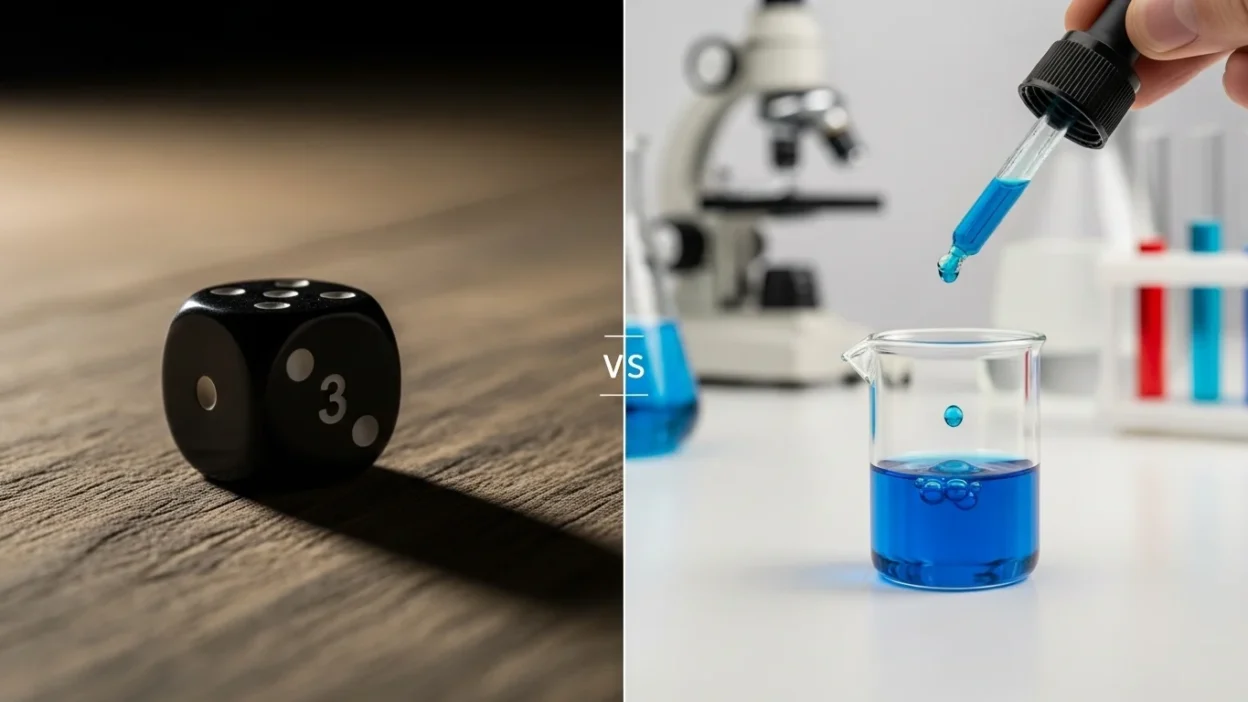
- Die → related to death or stopping life
- Dye → related to color or changing color
Example:
- Plants can die without water.
- She wants to dye her hair blue.
Simple Origin or Background
Both words come from very old forms of English, but they developed in different ways.
- Die has been used for many centuries to talk about death or ending life.
- Dye comes from a word that means “color” or “coloring material.”
Even though they sound the same today, their meanings have always been different.
Clear Explanation of the Difference
Let’s break it down in very simple terms.
What does “die” mean?
Die is a verb (an action word). It means:
- To stop living
- To end life
Examples:
- The old tree will die without water.
- He was very sick, but he did not die.
What does “dye” mean?
Dye can be a verb or a noun. It means:
- To change the color of something
- A substance used for coloring
Examples:
- She will dye her hair black.
- This fabric needs blue dye.
Comparison Table
| Feature | Die | Dye |
| Meaning | To stop living | To change color |
| Type | Verb | Verb and noun |
| Related to | Life and death | Colors and coloring |
| Example | The plant will die. | She will dye her dress. |
| Easy clue | Think “death” | Think “color” |
Which One to Use and When
Use die when you are talking about life ending.
- Animals, plants, or people stopping life
- Machines or devices stopping (informal use)
Examples:
- My phone might die soon.
- Fish can die in dirty water.
Use dye when you are talking about color.
- Changing hair color
- Coloring clothes or fabric
- Adding color to objects
Examples:
- I want to dye my hair red.
- They dye clothes in factories.
Common Mistakes People Make
Here are mistakes many learners make:
1. Using “die” instead of “dye”
❌ I want to die my hair.
✔ I want to dye my hair.
2. Using “dye” instead of “die”
❌ The plant will dye without water.
✔ The plant will die without water.
3. Forgetting the meaning
Some learners remember the spelling but forget the meaning. Always connect:
- Die → death
- Dye → color
4. Mixing in fast writing
When typing quickly, people often choose the wrong word because they sound the same. Always double-check your sentence.
Everyday Real-Life Examples
In Emails
- “My laptop will die soon, so I will reply later.”
- “I plan to dye my hair before the event.”
In News
- “Many animals may die due to climate change.”
- “The company uses natural colors to dye fabric.”
On Social Media
- “If my phone dies, I’m offline!”
- “Thinking to dye my hair pink 😄”
In Daily Life
- “Water the plants, or they will die.”
- “She wants to dye her dress blue.”
Short Learning Section for Students and Beginners
Here is a simple trick to remember forever:
Memory Trick
- Die = Dead → both start with “D”
- Dye = Color → think of “eye-catching colors”
Practice Sentences
Fill in the blanks:
- The flowers will ___ without water.
- She wants to ___ her hair brown.
- My phone might ___ tonight.
- They use red ___ for the cloth.
Answers:
- die
- dye
- die
- dye
Quick Tip
If your sentence talks about life, use die.
If your sentence talks about color, use dye.
FAQ Section
1. Are “die” and “dye” pronounced the same?
Yes, they sound exactly the same.
2. Can “dye” be a noun?
Yes. Example: “This dye is very strong.”
3. Is “die” only used for people?
No. It can be used for animals, plants, and even devices (informal).
4. Can I say “my phone dyed”?
No. You should say “my phone died.”
5. What is the past tense of “die”?
The past tense is died.
6. What is the past tense of “dye”?
The past tense is dyed.
7. How can I remember the difference easily?
Think:
- Die → death
- Dye → color
8. Why are they spelled differently if they sound the same?
English has many words that sound the same but have different meanings and spellings. These are called homophones.
Conclusion
The difference between die and dye is actually very simple once you understand it.
- Die is about life ending.
- Dye is about adding or changing color.
Even though they sound the same, their meanings are completely different. With a little practice and the memory tricks in this guide, you can use both words correctly and confidently.
Keep practicing with real-life sentences, and soon you won’t confuse them again.