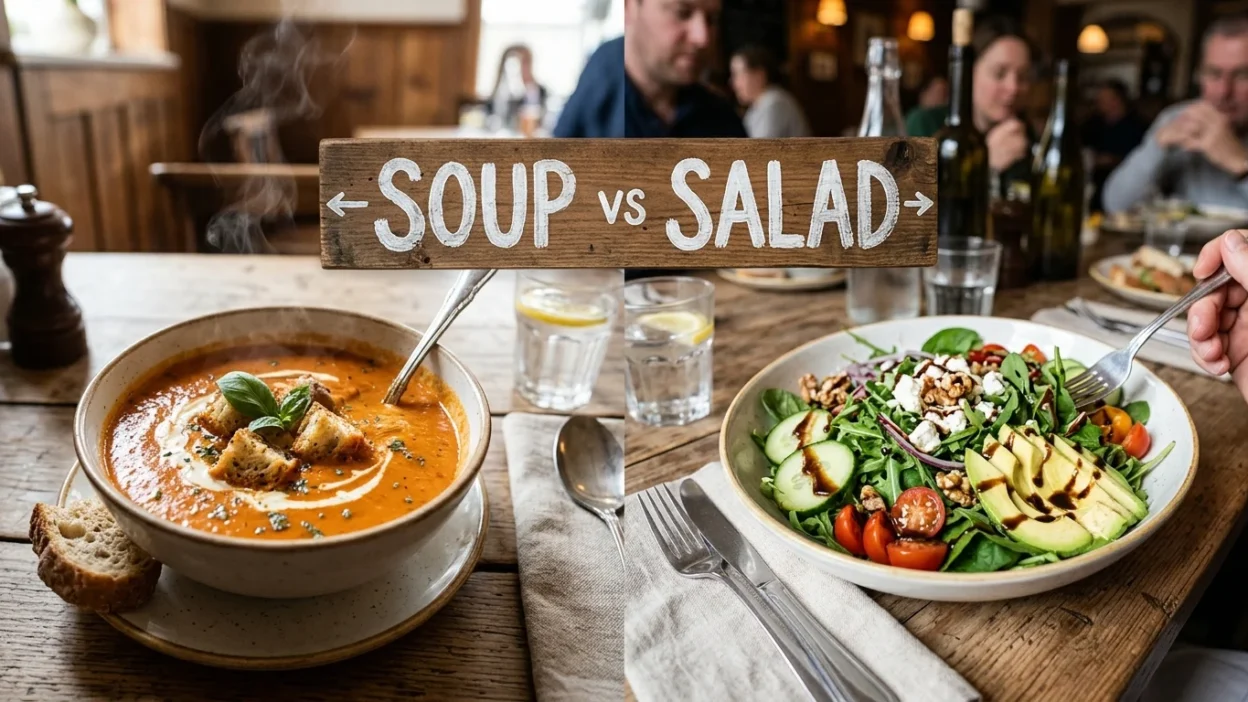
Many people get confused about the difference between soup and salad because both are common foods served during lunch or dinner. Sometimes they can even contain similar ingredients like vegetables, chicken, pasta, or beans. A cold soup may look a little like a salad, and a warm salad may feel almost like soup.
For students, ESL learners, and beginners, the words can seem very close. But the good news is that the difference is actually simple once you understand how each food is prepared and served.
This guide explains everything in very easy English so you can clearly understand soup vs salad without confusion.
Quick Answer: Soup vs Salad
Here is the short and simple answer:
Soup
- Usually liquid or partly liquid
- Often served warm or hot
- Made by boiling ingredients in water, broth, or milk
- Eaten with a spoon
Salad
- Usually dry or lightly mixed with dressing
- Often served cold
- Made by mixing raw or cooked ingredients together
- Eaten with a fork
In simple words:
- Soup is mostly liquid
- Salad is mostly solid
Simple Background of Soup and Salad
Soup and salad have been eaten for many years in different parts of the world.
Background of Soup
Soup became popular because it was easy to cook many foods together in water. People used vegetables, meat, beans, and spices to make warm meals. Soup was helpful during cold weather because it kept people warm and full.
Today, there are many kinds of soup:
- Chicken soup
- Tomato soup
- Vegetable soup
- Noodle soup
Some soups are thick, while others are very watery.
Background of Salad
Salad started as a simple mix of vegetables and herbs. People added oil, lemon juice, or salt for flavor. Over time, salads became more creative and included fruits, cheese, pasta, chicken, nuts, and many other foods.
Today, salads can be:
- Green salads
- Fruit salads
- Pasta salads
- Chicken salads
Some salads are light snacks, while others are full meals.
Main Difference Between Soup and Salad
The biggest difference is the amount of liquid.
Soup Has More Liquid
Soup is cooked in liquid like:
- Water
- Broth
- Cream
- Milk
The liquid is an important part of the dish. Without the liquid, it would not really be soup.
Example:
- Tomato soup
- Chicken noodle soup
- Lentil soup
Salad Has Less Liquid
Salad is mostly made of solid ingredients mixed together. It may have dressing, but the dressing is not the main part.
Example:
- Caesar salad
- Fruit salad
- Garden salad
The ingredients stay separate instead of floating in liquid.
Soup vs Salad Comparison Table
| Feature | Soup | Salad |
| Main Texture | Liquid or semi-liquid | Mostly solid |
| Usually Served | Hot or warm | Cold |
| Main Cooking Style | Boiled or simmered | Mixed together |
| Eating Tool | Spoon | Fork |
| Main Ingredients | Broth, vegetables, meat | Vegetables, fruits, pasta |
| Dressing or Broth | Broth is important | Dressing is optional |
| Common Meal Time | Lunch or dinner | Side dish or light meal |
| Can Be Cold? | Yes, sometimes | Yes, very often |
| Example | Chicken soup | Greek salad |
Which One Should You Use and When?
Sometimes people wonder which food is better for different situations. The answer depends on the meal, weather, and personal taste.
Choose Soup When:
- The weather is cold
- You want something warm
- You feel sick
- You want a soft meal
- You want more liquid in your food
Example:
- Many people eat chicken soup when they have a cold.
Choose Salad When:
- The weather is hot
- You want something fresh
- You want a light meal
- You enjoy crunchy foods
- You need a quick side dish
Example:
- A fresh green salad is popular during summer.
Some Meals Include Both
Restaurants and homes often serve soup and salad together. For example:
- Soup before the main meal
- Salad beside pasta or chicken
They can work very well together.
Common Mistakes People Make
Many learners mix up soup and salad because some foods look similar. Here are common mistakes.
1. Thinking All Salads Are Healthy
Not every salad is light or healthy. Some salads include:
- Creamy dressing
- Fried chicken
- Cheese
- Bacon
These can make a salad heavy.
2. Thinking Soup Must Be Hot
Some soups are cold.
Examples:
- Gazpacho
- Cold cucumber soup
So temperature alone does not decide if something is soup.
3. Confusing Thick Soup With Salad
Some thick soups have very little liquid. But if the food is still cooked in broth or liquid, it is usually soup.
4. Thinking Fruit Salad Is a Vegetable Dish
Fruit salad is still called salad even though it uses fruit instead of vegetables.
5. Using the Wrong Eating Tool
People usually:
- Eat soup with a spoon
- Eat salad with a fork
This is a simple clue for beginners.
Everyday Real-Life Examples
Understanding real examples can make learning easier.
In Daily Conversation
- “I had tomato soup for lunch.”
- “She ordered a salad with chicken.”
- “The soup is too hot.”
- “This salad tastes fresh.”
In Restaurants
You may hear:
- “Would you like soup or salad?”
- “The salad comes with dressing.”
- “Today’s soup is vegetable soup.”
On Social Media
People often post:
- Pictures of colorful salads
- Warm soup during winter
- Healthy meal ideas
- Homemade soup recipes
In News or Food Articles
You may read:
- “Cold soup is becoming popular in summer.”
- “Salads are common in healthy meal plans.”
In School or Office
Someone may say:
- “I packed salad for lunch.”
- “The cafeteria is serving soup today.”
These examples help you hear the words naturally.
Learning Section for Students and Beginners
Here are easy tricks to remember the difference.
Easy Memory Trick
Think like this:
- Soup = Spoon + Liquid
- Salad = Fork + Solid Food
This small trick helps many learners.
Simple Practice Sentences
Fill in the correct word:
- I ate chicken ___ for dinner.
- She mixed lettuce and tomatoes into a ___.
- The hot ___ warmed me during winter.
- He added dressing to his ___.
Answers:
- soup
- salad
- soup
- salad
Beginner Tip
Ask yourself:
“Is the liquid the main part?”
- Yes → probably soup
- No → probably salad
FAQ About Soup vs Salad
1. Is soup always hot?
No. Some soups are served cold, especially during hot weather.
2. Can salad be warm?
Yes. Some salads use warm chicken, potatoes, or grilled vegetables.
3. Which is healthier: soup or salad?
Both can be healthy or unhealthy depending on the ingredients.
4. Can soup be a full meal?
Yes. Many soups include meat, noodles, rice, or beans and can be very filling.
5. Can salad be eaten as a main dish?
Yes. Large salads with chicken, eggs, pasta, or cheese can be full meals.
6. Why do restaurants ask “soup or salad”?
Many meals include a choice between the two as a starter or side dish.
7. Is cereal considered soup?
People joke about this online, but cereal is generally not called soup.
8. What is the easiest way to tell the difference?
Check the liquid:
- Mostly liquid = soup
- Mostly solid = salad
Conclusion
Soup and salad may sometimes share similar ingredients, but they are very different foods. Soup is mainly liquid and usually eaten with a spoon, while salad is mostly solid and commonly eaten with a fork.
The easiest way to remember the difference is simple:
- Soup has broth or liquid as the main part.
- Salad is a mix of solid ingredients with little or no liquid.
Once you understand this basic idea, the confusion becomes much smaller. Whether you are a student, beginner, or ESL learner, you can now use the words soup and salad correctly in daily life, school, restaurants, and conversations.