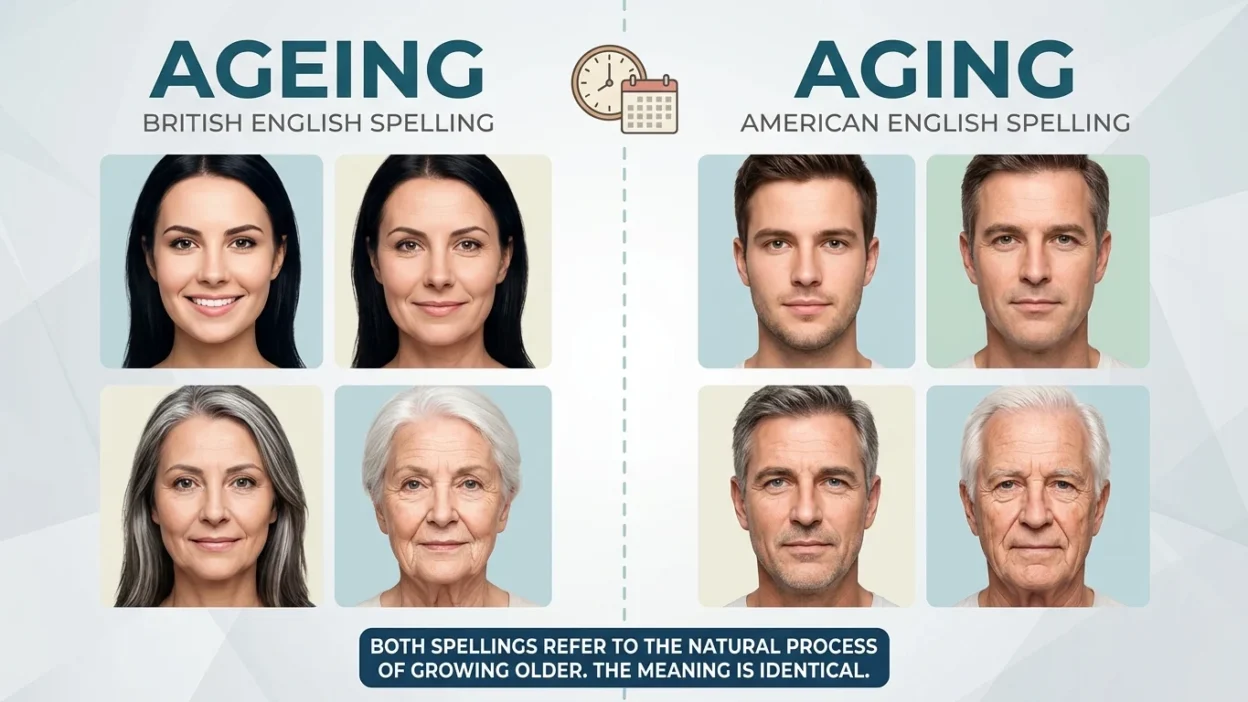
Many learners feel confused when they see “ageing” and “aging.” Both words look almost the same. Both sound the same when we speak. So, which one is correct?
The truth is simple: both are correct, but they are used in different types of English. This small spelling change can confuse students, ESL learners, and even native speakers. Don’t worry—this guide will make everything clear in very easy English.
Quick Answer
- Ageing = British English spelling
- Aging = American English spelling
- Both words have the same meaning
- Use ageing in the UK and similar regions
- Use aging in the USA
- Choose one style and stay consistent
Simple Origin or Background
The word comes from the verb “age.” It means to grow older or to develop over time.
When English spread to different countries, spelling rules changed slightly. This is why we now have:
- British English → keeps the extra “e” → ageing
- American English → removes the extra “e” → aging
This difference is not new. It has been used for many years and is still common today.
Clear Explanation of the Difference
There is no difference in meaning between “ageing” and “aging.”
Both words mean:
- Getting older
- Growing in age
- Changing over time
The only difference is spelling style.
Example:
- British: The population is ageing.
- American: The population is aging.
Both sentences mean exactly the same thing.
Comparison Table
| Feature | Ageing | Aging |
| Type of English | British English | American English |
| Spelling Style | Keeps “e” | Drops “e” |
| Meaning | Getting older | Getting older |
| Pronunciation | Same | Same |
| Usage Location | UK, Australia, etc. | USA |
| Correctness | Correct | Correct |
Which One to Use and When
Choosing the right spelling depends on where you are writing or who your audience is.
Use ageing when:
- Writing in British English
- Your audience is in the UK, Australia, or similar regions
- Your school or teacher follows British rules
Use aging when:
- Writing in American English
- Your audience is in the USA
- Your workplace or style guide uses American spelling
Important Tip
Do not mix both spellings in the same text. Choose one style and use it all the way.
Common Mistakes People Make
Here are some simple mistakes learners often make:
1. Mixing both spellings
❌ The ageing population is aging quickly.
✔ Choose one:
- The ageing population is ageing quickly.
- The aging population is aging quickly.
2. Thinking one is wrong
Some people believe “ageing” is incorrect. This is not true.
✔ Both are correct
✔ Only the spelling style is different
3. Adding extra letters
❌ Ageingg or agging
✔ Correct forms: ageing / aging
4. Using wrong style for the audience
If you write for an American reader, “ageing” may look unusual.
✔ Always match your audience
Everyday Real-Life Examples
Here are simple examples from daily life:
Emails
- British: We are studying the ageing process in our project.
- American: We are studying the aging process in our project.
News Sentences
- British: The country has an ageing population.
- American: The country has an aging population.
Social Media
- I can’t believe I’m aging so fast!
- My parents are ageing gracefully.
Both are fine depending on style.
Daily Conversations (Written)
- This phone is ageing well.
- This phone is aging well.
Same meaning, different spelling.
Short Learning Section for Students and Beginners
If you are learning English, here is an easy way to remember:
Simple Rule
- UK = ageing (with “e”)
- USA = aging (no “e”)
Memory Trick
Think of it like this:
- British English likes to keep letters
- American English likes to remove extra letters
Practice Exercise
Fill in the blank:
- The dog is ______ (ageing/aging).
- This building is ______ (ageing/aging).
✔ Answer: Both are correct—choose based on style.
FAQ Section
1. Are “ageing” and “aging” the same?
Yes, they have the same meaning. Only the spelling is different.
2. Which one is more correct?
Both are correct. It depends on whether you use British or American English.
3. Why does British English use “ageing”?
British English often keeps the original spelling, including the “e.”
4. Why does American English use “aging”?
American English prefers shorter spellings and removes extra letters.
5. Can I use both in one sentence?
No, it is better to use one style only in a sentence or text.
6. Is pronunciation different?
No, both words are pronounced the same way.
7. Which one should students learn first?
Learn the one your school or exam uses. Both are useful.
8. Is this difference common in English?
Yes, many words have British and American spelling differences.
Conclusion
The difference between ageing and aging is simple once you understand it.
Both words mean the same thing: growing older. The only difference is spelling. British English uses “ageing,” while American English uses “aging.”
There is no need to worry about which one is right or wrong. Instead, focus on using the correct style for your audience and staying consistent in your writing.
Once you remember this small rule, the confusion disappears—and your English becomes clearer and more confident.