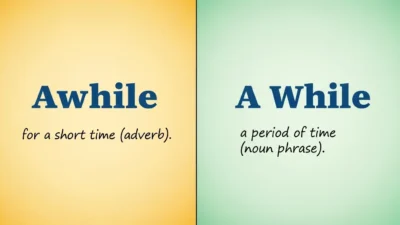
Many learners feel confused when they see “on to” and “onto.” They look almost the same, and they even sound the same when spoken. Because of this, people often use them incorrectly in writing.
The good news is that the difference is not hard. Once you understand one simple idea, you can choose the correct form every time. This guide will explain everything in very simple English, step by step.
Quick Answer
Here is the easiest way to remember:
- “Onto” = movement to a surface
- Example: She jumped onto the bed.
- “On to” = “on” + “to” (separate words with different jobs)
- Example: Let’s move on to the next topic.
👉 Tip:
If you can replace it with “on top of,” use onto.
If not, use on to.
Simple Background Explanation
Both forms come from the word “on.”
- “On” shows position (something is on something).
- Over time, people added “to” when they wanted to show movement or direction.
So:
- “Onto” became a single word to show movement to a surface.
- “On to” stayed as two words when each word has its own meaning.
That’s why both forms still exist today.
Clear Explanation of the Difference
Let’s break it down simply.
1. What Does “Onto” Mean?
“Onto” shows movement.
It means something is going from one place to a surface.
Think of it like this:
👉 “from somewhere → to a surface”
Examples:
- The cat jumped onto the table.
- He climbed onto the roof.
- She stepped onto the stage.
In all these examples, there is movement to a place.
2. What Does “On To” Mean?
“On to” is used when “on” and “to” are doing different jobs.
It often appears when:
- You are talking about continuing something
- You are talking about moving forward to the next thing
Examples:
- Let’s move on to the next lesson.
- She held on to her bag tightly.
- We went on to discuss the plan.
Here, the meaning is not about movement to a surface.
Comparison Table (Easy to Scan)
| Feature | Onto | On to |
| Form | One word | Two words |
| Meaning | Movement to a surface | “On” + “to” (separate meanings) |
| Use | Physical movement | Actions, ideas, progress |
| Test | Replace with “on top of” | Cannot replace with that |
| Example | Jump onto the bed | Move on to the next topic |
Which One to Use and When
Here’s a simple guide you can follow every time:
Use “Onto” when:
- There is movement
- Something goes to a surface
Examples:
- The dog ran onto the road.
- She placed the book onto the table.
Use “On to” when:
- You mean continue or move forward
- “On” and “to” belong to different parts of the sentence
Examples:
- Let’s go on to the next step.
- He held on to his dreams.
Quick Trick
Ask yourself:
👉 “Is something moving to a place?”
- Yes → onto
- No → on to
Common Mistakes People Make
Here are some mistakes learners often make:
❌ Mistake 1: Using “onto” for ideas
- Wrong: Let’s move onto the next chapter
- Correct: Let’s move on to the next chapter
👉 Why? This is not physical movement.
❌ Mistake 2: Using “on to” for movement
- Wrong: The cat jumped on to the chair
- Correct: The cat jumped onto the chair
👉 Why? This is movement to a surface.
❌ Mistake 3: Confusing “hold on to”
- Correct: She held on to the rope
👉 “Hold on to” is a phrase, so it stays as two words.
❌ Mistake 4: Guessing without checking meaning
Many people guess because the words look similar.
👉 Always think about meaning, not just spelling.
Everyday Real-Life Examples
Let’s see how these words are used in daily life.
1. In Emails
- “We will move on to the next point in our meeting.”
- “Please place the files onto the desk.”
2. In News
- “The player ran onto the field.”
- “The discussion moved on to new topics.”
3. On Social Media
- “I climbed onto a mountain today!”
- “Time to move on to better things.”
4. In Daily Conversation
- “Put your bag onto the chair.”
- “Let’s go on to the next shop.”
Short Learning Section for Students and Beginners
If you are learning English, follow these simple steps:
Step 1: Look for movement
Ask: Is something moving to a place?
- Yes → Use onto
- No → Go to Step 2
Step 2: Check the meaning
Ask: Is it about continuing or holding something?
- Yes → Use on to
Step 3: Practice with simple sentences
Try writing your own:
- I jumped ___ the bed.
- Let’s move ___ the next question.
(Answers: onto, on to)
Step 4: Read and notice
When you read books or messages, look for these words.
This helps you learn faster.
FAQs
1. Are “on to” and “onto” the same?
No. They look similar, but they have different meanings.
2. Can I always use “onto”?
No. Use it only when there is movement to a surface.
3. Is “on to” more common?
Both are common, but used in different situations.
4. How can I remember the difference?
Use this trick:
- Movement → onto
- No movement → on to
5. What about “hold on to”?
It is always written as on to (two words).
6. Can “onto” be used for ideas?
No. It is only used for physical movement.
7. Is this mistake very serious?
Not usually, but correct usage makes your English clearer.
8. Do native speakers make this mistake?
Yes, sometimes. That’s why learning the rule helps you stand out.
Conclusion
Understanding “on to” vs “onto” is easier than it looks. The key is to focus on meaning, not just spelling.
- Use “onto” when something moves to a surface.
- Use “on to” when talking about continuing or when the words have separate roles.
With a little practice, this difference will become natural. Keep reading, writing, and checking your sentences. Soon, you won’t feel confused at all.