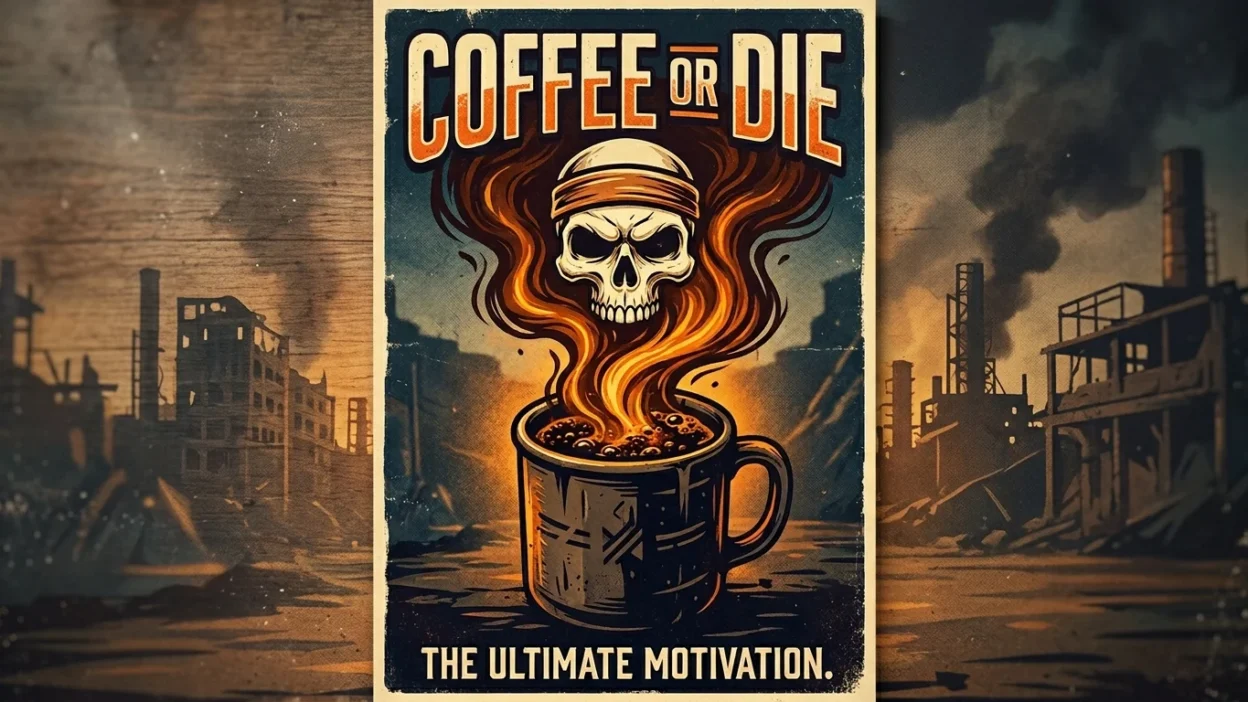
Many people see the phrase “coffee or die” online and feel confused.
Some think it sounds dangerous or serious. Others believe it is only about loving coffee very much. The truth is that this phrase is usually used in a humorous or dramatic way.
In daily conversation, social media, memes, and casual jokes, people often use strong expressions to show emotion. “Coffee or die” is one of those expressions. It does not usually mean someone will truly die without coffee. Instead, it shows that coffee feels extremely important to them.
This article explains the meaning in very simple English so students, ESL learners, and beginners can understand it easily.
Quick Answer
What Does “Coffee or Die” Mean?
- It means a person feels they really need coffee.
- It is usually a funny or dramatic expression.
- People use it to show they are tired before drinking coffee.
- It does not normally mean real danger.
- It is common in:
- memes
- social media posts
- casual conversations
- coffee-themed shirts and mugs
Simple Example
“Don’t talk to me before my coffee. Coffee or die.”
Meaning:
“I am very tired and badly need coffee first.”
Simple Background and Origin
The phrase became popular through internet culture, coffee jokes, and funny merchandise. Over time, many coffee lovers started using dramatic expressions to describe how important coffee feels in their daily routine.
People often say things like:
- “I can’t live without coffee.”
- “Coffee is life.”
- “Need coffee now.”
- “First coffee, then everything else.”
“Coffee or die” follows the same style. It uses exaggeration for humor.
This type of expression is common in English. People sometimes say extreme things jokingly to show strong feelings.
For example:
- “I’m starving”
(even if they are only hungry) - “This homework is killing me”
(even though it is not real harm)
In the same way, “coffee or die” usually means:
“I desperately want coffee right now.”
Clear Explanation of the Meaning
The Real Meaning
The phrase has two main ideas:
1. Coffee Feels Necessary
The speaker feels very tired, sleepy, or low on energy.
Coffee represents:
- energy
- focus
- waking up
- starting the day
2. The Phrase Is Dramatic on Purpose
The word “die” makes the sentence sound stronger and funnier.
Most people do not use it seriously. It is normally playful language.
Why People Use This Phrase
People use “coffee or die” to express:
- morning tiredness
- love for coffee
- dependence on caffeine
- stress from work or school
- humor about daily life
It is especially common among:
- students
- office workers
- night-shift workers
- parents
- coffee fans
Comparison Table
| Phrase | Simple Meaning | Serious or Funny? | Common Use |
| Coffee or die | I really need coffee | Usually funny | Social media, jokes |
| Coffee is life | Coffee feels very important | Funny/casual | Everyday speech |
| Need coffee ASAP | I want coffee immediately | More direct | Texts, chats |
| Can’t function without coffee | I feel tired without coffee | Casual exaggeration | Work or school talk |
| First coffee, then talk | I need coffee before conversation | Humorous | Morning jokes |
Which One to Use and When
Use “Coffee or Die” When:
- talking casually with friends
- making jokes online
- posting memes
- writing funny captions
- expressing morning tiredness
Example
“Monday morning mood: coffee or die.”
This sounds casual and humorous.
Avoid Using It When:
- writing formal school papers
- sending professional business emails
- speaking in serious situations
- talking with people who may misunderstand jokes
In formal settings, clearer phrases are better.
Better Formal Options
Instead of:
“Coffee or die.”
Say:
“I really need some coffee this morning.”
Or:
“I feel very tired today.”
Common Mistakes People Make
1. Thinking It Means Real Danger
Many beginners believe the phrase is literal.
But in most situations, it is only an exaggeration.
People are joking about needing energy.
2. Using It in Formal Writing
This phrase is informal.
It works well in:
- memes
- chats
- social media
It does not fit serious writing.
3. Translating It Word-for-Word
In some languages, direct translation may sound frightening or strange.
It is important to understand the emotional meaning, not only the exact words.
The emotional meaning is:
“I strongly want coffee.”
4. Using It Around Everyone
Some people dislike dramatic expressions.
Older adults, teachers, or professional coworkers may not enjoy this type of humor.
Always think about the situation and audience.
Everyday Real-Life Examples
Social Media Example
“Running on two hours of sleep. Coffee or die.”
Meaning:
“I am extremely tired and need coffee badly.”
Student Example
“Final exams tomorrow. Coffee or die tonight.”
Meaning:
“I need coffee to stay awake for studying.”
Workplace Example
“Early meeting at 7 AM. Coffee or die.”
Meaning:
“The meeting is very early, and I need energy.”
Text Message Example
Friend:
“Ready to go?”
Reply:
“Give me five minutes. Coffee or die.”
Meaning:
“I need coffee before leaving.”
Funny Caption Example
“My morning routine: wake up, coffee, survive.”
This uses the same style of humor.
Coffee Shop Humor Example
Some cafés and coffee products use phrases like:
- “Powered by coffee”
- “Coffee first”
- “But first, coffee”
- “Coffee saves lives”
These expressions are playful and emotional, not literal.
Short Learning Section for Students and Beginners
Easy Rule to Remember
When English speakers say dramatic things casually, they often do not mean them literally.
“Coffee or die” is an example of exaggeration.
Key Vocabulary
| Word | Simple Meaning |
| Coffee | A drink that gives energy |
| Die | Stop living |
| Exaggeration | Making something sound bigger or stronger |
| Casual | Relaxed and informal |
| Literal | Exact real meaning |
Beginner Tip
Ask yourself:
“Is this sentence serious or emotional?”
With “coffee or die,” the speaker is emotional and humorous.
Simple Memory Trick
Think of this sentence:
“I need coffee very badly.”
That is usually the true meaning.
FAQ Section
1. Is “coffee or die” serious?
No. Most people use it jokingly or dramatically.
2. Does it mean addiction?
Not always. It usually just means someone really wants coffee or feels tired.
3. Can I use this phrase at school?
You can use it casually with friends, but not usually in formal assignments.
4. Is the phrase rude?
Normally, no. It is usually seen as funny. But some people may dislike dramatic language.
5. Why do people exaggerate in English?
Exaggeration makes speech more emotional, funny, and expressive.
Examples:
- “I’m dying of boredom.”
- “This bag weighs a ton.”
- “Coffee or die.”
6. Is this phrase common online?
Yes. It appears often in:
- memes
- captions
- coffee posts
- jokes
- shirts and mugs
7. Can beginners use this phrase?
Yes, but only in casual situations where humor is acceptable.
8. What is a safer formal alternative?
You can say:
- “I really need coffee.”
- “I’m very tired.”
- “I need some caffeine.”
These sound more professional.
Conclusion
The phrase “coffee or die” is a casual and humorous English expression. People use it to show they feel extremely tired and strongly want coffee. It is not usually meant literally.
The phrase became popular through internet jokes, coffee culture, and social media humor. Even though the words sound serious, the real meaning is usually simple:
“I need coffee badly right now.”
For students, ESL learners, and beginners, the most important thing to remember is that English speakers often exaggerate emotions for fun. Understanding the feeling behind the words helps remove confusion.
When used in the right situation, “coffee or die” can sound funny, relatable, and easy to understand.