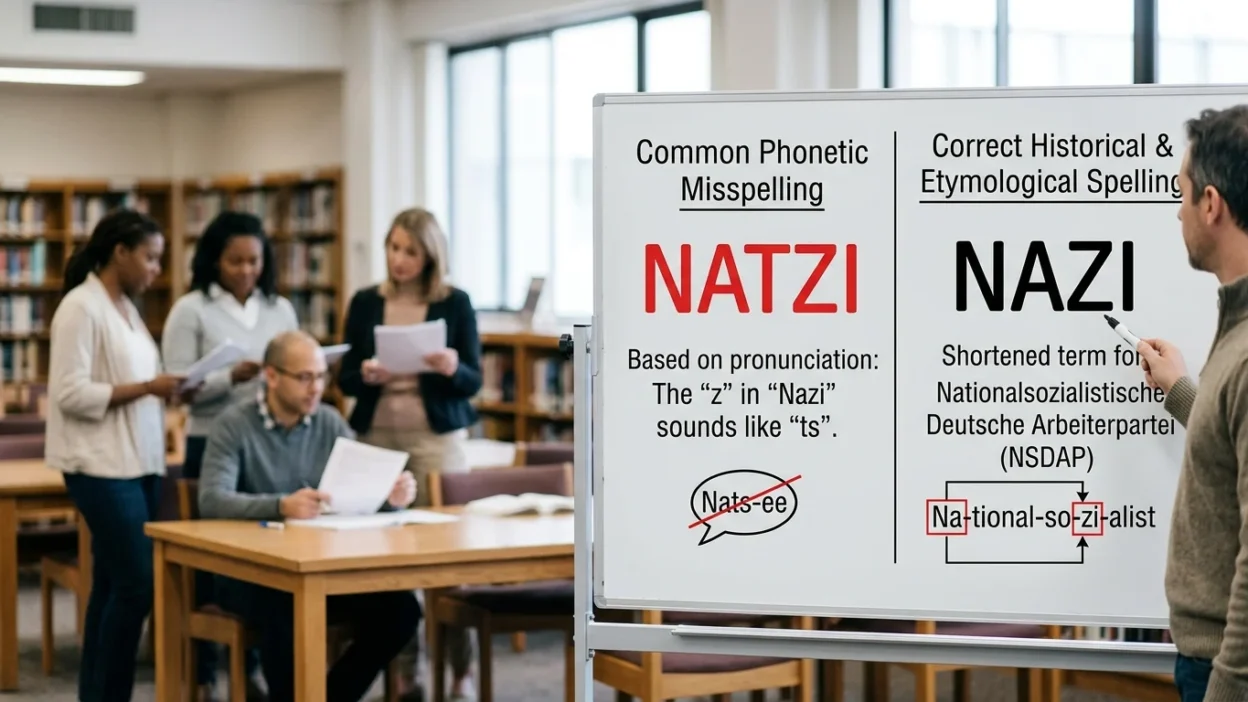
Many people get confused between “natzi” and “nazi” because the two words look and sound almost the same. In typing, texting, or online comments, one extra letter can completely change the spelling. Some people also think “natzi” is another real English word, but that is not true in most cases.
If you are a student, ESL learner, or beginner, this guide will help you clearly understand the difference in very simple English. By the end, you will know which spelling is correct, when to use it, and how to avoid common mistakes.
Quick Answer
- Nazi is the correct historical and political word.
- Natzi is usually a spelling mistake of “Nazi.”
- “Nazi” refers to members or ideas connected to Nazi Germany during World War II.
- “Natzi” is not accepted as a standard English word in normal writing.
- In school writing, news, books, and formal English, always use “Nazi.”
Simple Background and Origin
The word “Nazi” comes from Germany. It is connected to the National Socialist German Workers’ Party, led by Adolf Hitler during the 1930s and 1940s.
The Nazis ruled Germany before and during World War II. The word is now strongly linked with war, racism, violence, and dictatorship.
Because the word is short and unusual, people sometimes spell it incorrectly as:
- Natzi
- Nazy
- Natsi
Among these, “natzi” is one of the most common typing mistakes.
What Does “Nazi” Mean?
“Nazi” is both a historical and political term.
It can describe:
- A member of Hitler’s political movement
- Someone connected to Nazi Germany
- Ideas related to extreme racism and dictatorship
Examples:
- “The Nazi government ruled Germany during World War II.”
- “Many history books discuss Nazi Germany.”
- “The museum teaches students about Nazi history.”
The word is serious and sensitive because it relates to real historical suffering and war.
What Does “Natzi” Mean?
In most situations, “natzi” has no official meaning in English.
It is usually:
- A typo
- A spelling mistake
- A wrong version of “Nazi”
Sometimes people accidentally write “natzi” because:
- They type too fast
- They are unsure of the spelling
- Their keyboard adds an extra letter
- They hear the pronunciation incorrectly
Example of a mistake:
❌ “The natzi army invaded countries during the war.”
Correct version:
✅ “The Nazi army invaded countries during the war.”
The Main Difference Between Natzi and Nazi
The biggest difference is very simple:
- Nazi = correct word
- Natzi = incorrect spelling in most cases
“Nazi” is accepted in dictionaries, history books, schools, and news writing.
“Natzi” is generally not accepted as standard English.
Easy Comparison Table
| Feature | Nazi | Natzi |
| Correct English spelling | Yes | No |
| Found in dictionaries | Yes | Usually no |
| Historical meaning | Yes | No real standard meaning |
| Used in schools and books | Yes | No |
| Common typing mistake | No | Yes |
| Safe to use in formal writing | Yes | No |
| Related to World War II | Yes | Only by mistake |
Which One Should You Use?
Use “Nazi” When:
You are talking about:
- World War II
- German history
- Adolf Hitler
- Nazi Germany
- Historical events
- Political discussions
Example sentences:
- “Students studied Nazi history in class.”
- “The documentary explained Nazi rule.”
- “The book talks about Nazi Germany.”
Do Not Use “Natzi” In Formal Writing
Avoid “natzi” in:
- School essays
- Exams
- Homework
- News writing
- Professional emails
- Academic work
Most teachers and readers will see it as a spelling error.
Why People Make This Mistake
There are several reasons people type “natzi” instead of “Nazi.”
1. Fast Typing
People often press extra letters while typing quickly online.
Example:
- Nazi → Natzi
2. Pronunciation Confusion
Some learners hear the word differently and guess the spelling incorrectly.
3. ESL Learning Challenges
English learners sometimes add letters because English spelling can feel confusing.
4. Autocorrect Problems
Phones and keyboards may accidentally change words.
Common Mistakes People Make
Mistake 1: Thinking “Natzi” Is Another Official Word
Many beginners think both spellings are acceptable.
That is incorrect.
Only “Nazi” is standard English spelling.
Mistake 2: Using Lowercase in Formal Writing
In many cases, “Nazi” is capitalized because it comes from a proper historical name.
Correct:
✅ Nazi
Less formal or incorrect in many cases:
❌ nazi
Mistake 3: Using the Word Casually
The term “Nazi” has a serious historical meaning. It should not be used jokingly or carelessly.
Everyday Real-Life Examples
In School Writing
❌ “The natzi party controlled Germany.”
✅ “The Nazi Party controlled Germany.”
In News Articles
✅ “The article discussed Nazi history.”
News writing almost always uses the correct spelling: “Nazi.”
On Social Media
People sometimes write:
- “natzi”
- “natsi”
These are usually typing mistakes.
In Online Chats
Wrong:
❌ “I watched a movie about natzi Germany.”
Correct:
✅ “I watched a movie about Nazi Germany.”
In History Books
You will see:
- Nazi Germany
- Nazi soldiers
- Nazi rule
You will almost never see “natzi” in professional history writing.
Simple Grammar and Spelling Tips
Remember This Easy Trick
Think of:
Na + zi = Nazi
There is no extra “t.”
Visual Memory Tip
Correct:
✅ Nazi
Wrong:
❌ Natzi
The correct word is shorter and cleaner.
Short Learning Section for Students and Beginners
What Students Should Remember
- “Nazi” is the correct historical word.
- “Natzi” is usually a mistake.
- Always check spelling before submitting school work.
- Use capital “N” in formal writing.
Easy Practice Sentences
Fill in the blank with the correct word:
- The museum teaches about ______ Germany.
- Students learned about World War II and the ______ Party.
- The history teacher corrected the spelling from “natzi” to ______.
Answers:
- Nazi
- Nazi
- Nazi
Beginner Writing Tip
If you are unsure about spelling, read the sentence slowly before sending or submitting it.
Frequently Asked Questions (FAQ)
1. Is “natzi” a real English word?
Usually no. It is mostly a spelling mistake of “Nazi.”
2. Which spelling is correct: natzi or Nazi?
“Nazi” is the correct spelling.
3. Why do people type “natzi”?
Mostly because of fast typing, spelling confusion, or keyboard mistakes.
4. Should “Nazi” start with a capital letter?
Yes, in formal writing it is usually capitalized.
Example:
✅ Nazi Germany
5. Can I use “natzi” in school essays?
No. Teachers will normally mark it as incorrect spelling.
6. Is “Nazi” an offensive word?
It is a serious historical and political term. It should be used carefully and respectfully.
7. Do dictionaries include “natzi”?
Most standard dictionaries do not treat it as a correct English word.
8. Is “Nazi” still used today?
Yes. It is often used in history discussions, documentaries, books, and news reports about World War II and related topics.
Final Conclusion
The difference between “natzi” and “Nazi” is very simple once you understand it clearly.
- Nazi is the correct and accepted English word.
- Natzi is usually just a spelling mistake.
If you are writing about history, World War II, or Nazi Germany, always use “Nazi.” Remember that the word has a serious historical meaning, so it should be used carefully and respectfully.
For students and ESL learners, the easiest way to remember is this:
✅ Nazi = correct
❌ Natzi = incorrect
With this simple rule, you can avoid confusion and use the word correctly in writing, schoolwork, conversations, and everyday English.