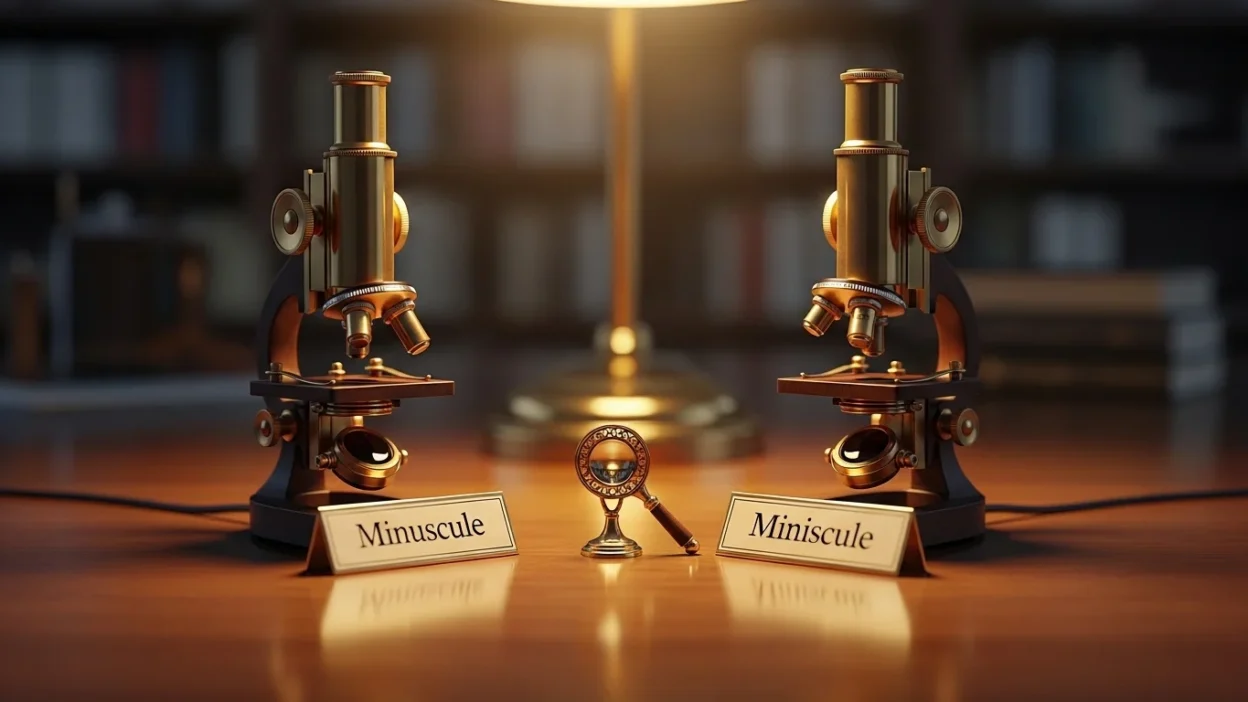
Many English learners—and even native speakers—get confused between “minuscule” and “miniscule.” The words look almost the same. They sound very similar when spoken. Because of this, people often mix them up without even noticing.
But here’s the truth: only one of these words is considered correct in standard English. The other is a very common mistake.
This guide will explain everything in simple, clear language so you can understand the difference right away and use the correct word with confidence.
Quick Answer
- Minuscule ✅ → Correct spelling
- Miniscule ❌ → Common mistake (not standard)
- Meaning of minuscule:
- Very small
- Tiny in size or amount
- Example:
- “The chances are minuscule.”
👉 Always use minuscule in writing.
Simple Origin (Background)
The word minuscule comes from old Latin and French words that mean “small” or “little.”
Long ago, it was also used to describe small letters in writing (like lowercase letters).
So, the correct spelling has always been:
- mi-nu-scule (notice the “nu” in the middle)
The incorrect form miniscule likely came from how people hear and say the word. Since it sounds like “mini,” people started spelling it that way—but it is not correct in formal English.
Clear Explanation of the Difference
Let’s make it very simple:
1. Minuscule (Correct Word)
- Real English word
- Used in books, exams, emails, and professional writing
- Means very small
✔ Example:
- “There is a minuscule difference between the two colors.”
2. Miniscule (Incorrect Word)
- Not accepted in standard English
- A spelling mistake
- Should be avoided in writing
❌ Example:
- “The chances are miniscule.” (wrong)
✔ Correct version:
- “The chances are minuscule.”
Comparison Table (Easy to Scan)
| Feature | Minuscule ✅ | Miniscule ❌ |
| Spelling | Correct | Incorrect |
| Usage | Formal & informal | Not recommended |
| Meaning | Very small | Same idea, but wrong form |
| Common? | Yes | Very common mistake |
| Safe to use? | Yes | No |
Which One Should You Use?
You should always use “minuscule.”
Here’s a simple tip to remember:
👉 Think of “nu” in the middle:
mi-NU-scule
Do NOT use “mini” in the spelling, even though it sounds similar.
When to Use “Minuscule”
Use it when you want to describe:
- Very small size
- Very small amount
- Tiny differences
✔ Examples:
- “The insect was minuscule.”
- “He made a minuscule mistake.”
- “The chances are minuscule.”
Common Mistakes People Make
Here are some mistakes many learners make:
1. Spelling it like “mini”
❌ miniscule
✔ minuscule
Reason: People think of the word “mini,” which means small.
2. Trusting pronunciation too much
The word sounds like:
- “mini-skule”
But spelling is:
- minuscule
👉 English spelling is not always the same as pronunciation.
3. Using the wrong word in formal writing
Even though “miniscule” is common online, it is not correct in:
- Exams
- Job applications
- Academic writing
4. Not checking spelling
Many people type quickly and don’t notice the mistake.
👉 Always double-check your writing.
Everyday Real-Life Examples
Here are simple examples from daily life:
In Emails
- “There is a minuscule delay in the delivery.”
- “The error is minuscule and easy to fix.”
In News or Reports
- “The difference in results was minuscule.”
- “The risk remains minuscule.”
On Social Media
- “I made a minuscule change to my profile.”
- “The improvement is minuscule, but I’m happy.”
In Daily Conversations
- “That scratch is minuscule, don’t worry.”
- “The price difference is minuscule.”
Short Learning Section (For Students & Beginners)
Here’s a quick way to learn and remember:
Step 1: Focus on the correct spelling
- Write it 3–5 times:
- minuscule
- minuscule
- minuscule
Step 2: Use it in your own sentences
- “The amount of sugar is minuscule.”
- “The detail is minuscule.”
Step 3: Remember the rule
👉 Only one correct form: minuscule
Step 4: Practice spotting mistakes
Find the wrong sentence:
- “The change is miniscule.” ❌
- “The change is minuscule.” ✅
FAQ Section
1. Is “miniscule” a real word?
No. It is a common spelling mistake. It is not correct in standard English.
2. Why do people write “miniscule”?
Because it sounds like “mini,” which means small. This confuses many people.
3. What does “minuscule” mean?
It means very small or tiny.
4. Is “minuscule” formal or informal?
It can be used in both:
- Formal writing (essays, reports)
- Informal writing (messages, chats)
5. How do I remember the correct spelling?
Remember:
👉 It has “nu”, not “ni”
👉 mi-NU-scule
6. Can I use “miniscule” in casual writing?
It’s better not to. Even in casual writing, it is still considered incorrect.
7. Are both words pronounced the same?
They sound very similar, which is why people get confused.
8. Is “minuscule” used often?
Yes. It is a common word, especially when talking about small amounts or differences.
Conclusion
The confusion between minuscule and miniscule is very common, but the answer is simple:
- ✅ Minuscule = correct
- ❌ Miniscule = incorrect
Even though they sound similar, only minuscule is accepted in proper English.
If you remember just one thing, remember this:
👉 Always spell it with “nu” — minuscule