Many people feel confused when they see “peoples” and “peoples’” in writing. At first glance, both words look almost the same. The only visible difference is the apostrophe. Because of this, students, ESL learners, and even native English speakers sometimes use them incorrectly.
The good news is that the difference is actually simple once you understand what each word means. In this guide, you will learn when to use peoples and when to use peoples’ in clear and easy English.
Quick Answer
Here is the short and simple answer:
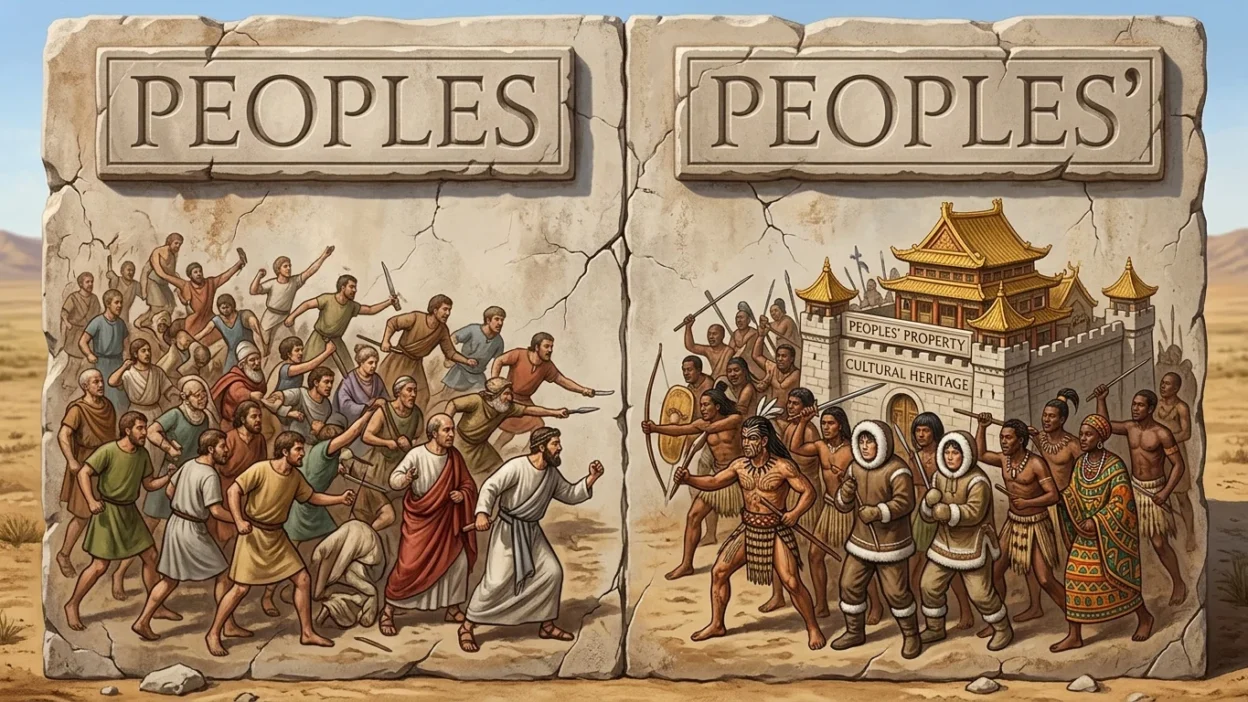
- Peoples = more than one group of people
- Example: The peoples of Asia have many cultures.
- Peoples’ = something belonging to different groups of people
- Example: The peoples’ traditions were celebrated.
Easy Trick to Remember
- No apostrophe = just plural
- Apostrophe after s = shows ownership
Simple Background of the Words
To understand these words, first look at the word people.
The word people usually means:
- a group of humans
- ordinary men and women
- citizens of a country
Example:
- People are waiting outside.
But English also uses people in another way. Sometimes it means:
- a nation
- an ethnic group
- a community with its own culture
Example:
- The Japanese people
- The Indigenous people of the region
When talking about many different groups or nations, English sometimes uses peoples.
That is why the word exists.
What Does “Peoples” Mean?
Meaning of “Peoples”
Peoples is the plural form of people when talking about:
- different nations
- ethnic groups
- cultural groups
- communities
It does not usually mean “many persons.”
Examples
- The peoples of Africa speak many languages.
- Many Indigenous peoples live in the area.
- The museum teaches about ancient peoples.
In these examples, peoples means separate groups with different identities or cultures.
What Does “Peoples’” Mean?
Meaning of “Peoples’”
Peoples’ is the possessive form of peoples.
It shows that something belongs to multiple groups of people.
Examples
- The peoples’ histories were preserved.
- The peoples’ traditions are important.
- The peoples’ languages are taught in schools.
Here, the traditions, histories, and languages belong to different cultural groups.
Main Difference Between Peoples and Peoples’
The biggest difference is ownership.
| Word | Meaning | Use |
| Peoples | many groups of people | plural noun |
| Peoples’ | something owned by many groups | possessive noun |
Simple Example
- Peoples gathered for the event.
- Different groups came together.
- Peoples’ music filled the festival.
- The music belonged to those groups.
Easy Comparison Table
| Feature | Peoples | Peoples’ |
| Part of speech | plural noun | possessive noun |
| Shows ownership? | No | Yes |
| Apostrophe? | No | Yes |
| Meaning | many cultural or ethnic groups | something belonging to those groups |
| Example | The peoples lived peacefully. | The peoples’ stories were shared. |
Which One Should You Use?
Use “Peoples” When:
You are simply talking about many groups or communities.
Examples
- The peoples of the world want peace.
- Ancient peoples used simple tools.
- Different peoples celebrate in different ways.
No ownership is shown here.
Use “Peoples’” When:
Something belongs to those groups.
Examples
- The peoples’ customs were respected.
- The peoples’ voices were heard.
- The peoples’ artwork was displayed.
The customs, voices, and artwork belong to the peoples.
Why This Confuses So Many Learners
There are three reasons people often get confused.
1. “People” Already Looks Plural
The word people already feels plural.
Example:
- one person
- many people
So learners wonder:
- Why do we need peoples?
The answer:
- Peoples means different cultural groups, not simply many persons.
2. Apostrophes Are Tricky
Many students struggle with apostrophes.
Examples:
- dog’s
- dogs’
- children’s
- peoples’
The apostrophe changes the meaning by showing ownership.
3. “Peoples” Is Less Common
Most daily conversations use:
- people
Not:
- peoples
Because of this, learners do not see the word often.
Common Mistakes People Make
Mistake 1: Using “Peoples” for Regular Plural
❌ There were many peoples at the mall.
✅ There were many people at the mall.
Why?
Because you are talking about many individuals, not cultural groups.
Mistake 2: Forgetting the Apostrophe
❌ The peoples traditions are beautiful.
✅ The peoples’ traditions are beautiful.
Why?
The traditions belong to the peoples.
Mistake 3: Adding Apostrophes Everywhere
❌ People’s from many countries attended.
✅ People from many countries attended.
Why?
No ownership is shown.
Everyday Examples
In Daily Conversation
- Different peoples have different foods.
- The peoples’ celebrations lasted all week.
In School Writing
- Students learned about Indigenous peoples.
- The peoples’ history was discussed in class.
In News Writing
- The region’s peoples want peace.
- The peoples’ rights were protected.
On Social Media
- I love learning about different peoples.
- The peoples’ art styles are amazing.
In Emails
- The event celebrates many peoples and cultures.
- The peoples’ performances were wonderful.
Simple Grammar Breakdown
Here is an easy step-by-step guide.
Step 1: Ask Yourself a Question
Are you talking about:
- many groups?
OR - something owned by those groups?
Step 2: Choose the Correct Form
If talking about groups only:
Use peoples
Example:
- Many peoples lived there.
If showing ownership:
Use peoples’
Example:
- The peoples’ homes were rebuilt.
Small Practice Section
Try these yourself.
Question 1
The ______ traditions are famous worldwide.
Answer:
- peoples’
Why?
The traditions belong to the peoples.
Question 2
Different ______ speak different languages.
Answer:
- peoples
Why?
No ownership is shown.
Question 3
The museum showed many ancient ______.
Answer:
- peoples
Learning Tips for Students and Beginners
1. Learn the Base Word First
Understand:
- person → people
- people → peoples
This makes the grammar easier.
2. Remember the Ownership Rule
If something belongs to someone:
- add apostrophe
Examples:
- students’ books
- teachers’ lounge
- peoples’ culture
3. Read Real Sentences
Practice helps more than memorizing rules.
Read:
- books
- articles
- school texts
Look carefully at apostrophes.
4. Keep It Simple
In everyday English, most situations only need:
- people
Use peoples mostly for:
- cultures
- nations
- ethnic groups
Frequently Asked Questions (FAQ)
1. Is “peoples” a real English word?
Yes. It is a correct English word used for different cultural, ethnic, or national groups.
2. What is the difference between “people” and “peoples”?
- People = humans in general
- Peoples = separate groups or cultures
3. What does “peoples’” mean?
It means something belongs to multiple groups of people.
Example:
- The peoples’ land
4. Is “peoples” common in daily English?
Not very common. It appears more in:
- history
- culture
- politics
- academic topics
5. Can I say “many peoples”?
Yes, but only when talking about different groups or cultures.
Correct:
- Many peoples lived in the region.
6. Where does the apostrophe go in “peoples’”?
The apostrophe comes after the final s because the noun is already plural.
Correct:
- peoples’
7. Is “people’s” different from “peoples’”?
Yes.
- People’s = belonging to one group of people
- Peoples’ = belonging to many groups
Example:
- The people’s choice (one population)
- The peoples’ traditions (many groups)
8. Which word should beginners use most often?
Usually:
- people
Use:
- peoples
- peoples’
only when discussing multiple cultural or ethnic groups.
Final Thoughts
The difference between peoples and peoples’ becomes easy once you focus on one idea: ownership.
- Peoples = many groups of people
- Peoples’ = something belonging to those groups
If there is no ownership, do not use the apostrophe. If something belongs to the groups, add the apostrophe after the s.
With a little practice, these words will start to feel natural. The next time you see them in books, news articles, or classwork, you will understand exactly what they mean and how to use them correctly.